


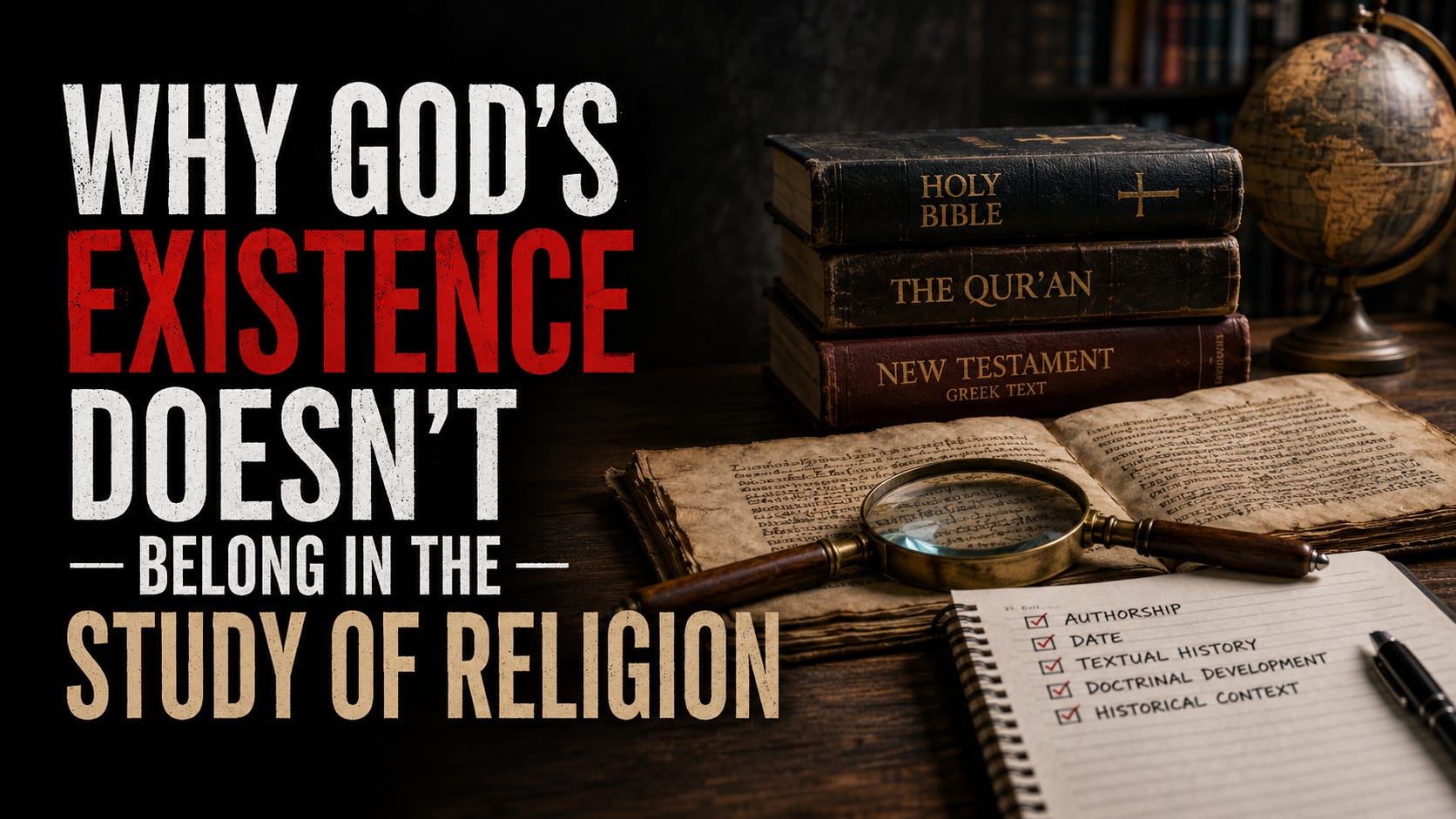
Yesterday a convinced atheist from Quora gave me some negative feedback about this publication, that the newsletter sucks and it's nothing more than mindless drivel that screams I hump for God. He told me to prove him wrong or go do something meaningful with my life instead.
I don't get offended by negative feedback, in fact I appreciate it, since it tells me why the people who don't like this don't like it, or points out something I could do better. People pay for getting their work reviewed, and critical comments come free.
But I didn't agree with this particular review, and I want to lay out my answer to it here and share it with you, including something about my upbringing.
Don’t just read this piece in your inbox—like it, comment on it, and critique it to help shape the future of The Unholy Truth, rather than leaving me in the void.
You Can’t Be the Referee and a Player at Once
Biblical criticism only works if the reader trusts that the analysis isn’t bent toward a predetermined conclusion. The moment I plant a flag (for God, against God), every argument I make afterward gets read through that flag. Point out that the Pastoral Epistles weren’t written by Paul, and a reader who knows I’m an atheist hears an attack on Christianity. Point out the same thing as someone with no declared position, and the reader has to deal with the evidence on its own terms.
The evidence about Pauline authorship doesn’t change based on what I believe about the afterlife. The vocabulary statistics, the anachronistic church structure, the theological drift from the undisputed letters, none of it cares whether I pray. So why would I hand readers a reason to dismiss the analysis before they’ve read it?
Argue against God while doing this work and all you’ve built is an echo chamber where atheists nod along, everyone else clicks away, and you patiently preach to the converted.
The Vegan and the Steak
Think about it. Why should a Christian care what you say about Jesus, the Bible, or the Church if you reject God outright and rub their nose in it every chance you get? As a meat lover, would you trust or even care about a vegan’s review of a steak dish, especially if that person couldn’t help bringing up the horrors of slaughterhouses and dairy farming?
I understand the instinct, but it confuses two different jobs. A vegan can tell you, accurately, whether the steak is overcooked, whether the cut matches the menu description, whether the kitchen sourced what it claimed to source. Those are questions of fact, and competence answers them, not appetite. But the constant reminder of their veganism kills the trust.
What I do here is the second kind of work, without getting into my views on animal farming. When did this text get written? Who wrote it? What did the earliest manuscripts say before later hands changed them? How did a particular doctrine develop across three centuries? These are historical and textual questions with historical and textual answers. My beliefs about the divine are as relevant to them as a chef’s politics are to whether the meat is cooked through.
And the analogy cuts both ways. You don’t want the steak reviewed by someone so devoted to steak that they’ll defend a bad one. You want someone who’ll tell you the truth about what’s on the plate and leave all personal opinions aside.
What Belief Has to Do with It
In other words, what I have to say about Christianity or Islam shouldn’t have anything to do with whether I believe in a god.
The dating of the Gospel of Mark isn’t a theological position. The textual history of the ending of Mark, those verses that don’t appear in the oldest manuscripts, says nothing about whether Jesus rose. The development of Trinitarian doctrine through the fourth-century councils is documented church history that believing scholars and secular scholars largely agree on. The disagreement, where it exists, runs along lines of evidence and method, never along lines of faith versus unbelief.
Some of the best textual critics in the field are practicing Christians. Some are atheists. They publish in the same journals and cite each other’s work because the work stands or falls on its merits. That’s the standard I’m holding this publication to, and declaring my personal theology would undermine it.
Again, this cuts both ways for me as a reader, too. A scholar who happens to be a Christian is fine by me, right up until they introduce themselves as a Christian scholar, at which point I’ve stopped listening. Same with an atheist. The work is welcome, but the moment someone makes their atheism the headline, I lose interest. It's a reflex, a guard against letting someone's agenda do my thinking for me.
If you’re not already a paid subscriber and you’re finding value here, I’d love for you to consider becoming one to keep The Unholy Truth alive.
Where This Habit Actually Comes From
All of that is true, but I’ll be honest about the reason, because it predates any of these editorial calculations.
I came up under a strict secularist upbringing, and the lesson got drilled in early: in any official capacity, you leave your personal religious and political views outside the door. You don’t bring them to the desk. You don’t let them color the work you put your name to in a professional setting. The job is the job, and your private convictions are private.
That training stuck, and it shapes how I run this place. The Unholy Truth isn’t my personal diary. It’s a publication with a stated purpose, which is to give readers scholarly material on religion and history without sermon and without an axe to grind. The second I turn it into a confessional, a place where I tell you what I believe and why you should believe it too, it stops being that and becomes something I have no interest in writing.
You came here for evidence, argument, and the occasional uncomfortable fact about texts people treat as untouchable. You didn’t come for my spiritual autobiography, and you’re not going to get it. I think that’s the respectful arrangement, both to the material and to you.
I feel respected and a sense of trust in your writing and research. It's like people discussing a beautiful classical music piece and they can have very different religious and politial views.
So thanks a lot saying it like this.
Tanner, your neutral approach is an important element in why I read you. I trust your scholarship, your analysis, and appreciate your fascinating speculations about what might’ve happened if this or that doctrine had or had not taken hold. Politics made visible in the realm of religion! Thank you, friend.