


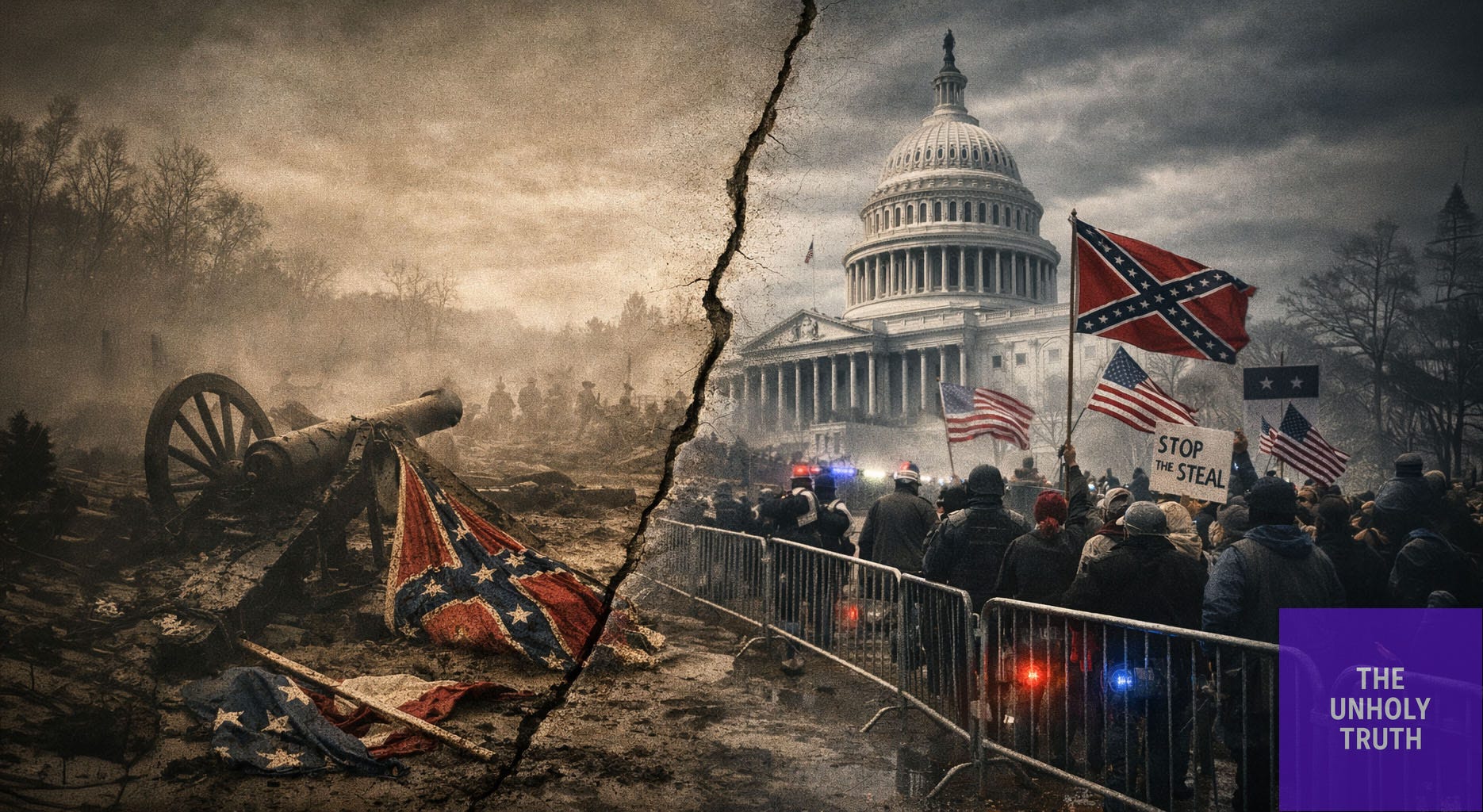
In 1865, the guns finally went quiet in “The Land of the Free.” The Confederacy was finished, General Lee handed over his sword to General Grant at Appomattox, and four million ethnic African slaves were, at least on paper, declared free. That meant the Civil War was over. Not so fast.
In reality, though, the fight just moved—from battlefields to courtrooms, from plantations to prisons, from open rebellion to coded language, and from military uniforms to tailored suits and snappy campaign slogans.
No, America’s biggest issue today isn’t inflation or immigration. It isn’t even polarization.
It’s all about a war fought more than 150 years ago that never truly ended and keeps resurfacing in new modern forms.
Let me explain.
What the Civil War Was Actually About
Before we go any further, let’s clarify what the Civil War actually was — focusing only on the parts relevant to this discussion.
In 1861, eleven Southern states seceded from the United States after Abraham Lincoln was elected president, issuing formal declarations of secession. Their reasons, written plainly in roughly 10,000 words across those documents — even if they hoped you would zoom out long before you finished reading — placed slavery at the center of nearly every argument. The Southern economy depended on enslaved labor, the political system was built to protect it, and the social order justified it.
The war that followed lasted four years and killed more than 600,000 Americans. By the time it ended, entire regions were devastated, cities had burned, and families were torn apart. But at least with the surrender of the Confederate army, slavery was formally abolished through the 13th Amendment — at a time when elected representatives amended the Constitution, not nine unelected judges.
If you were naïve enough, you could almost believe the issue was settled — that the Union was stamped as indivisible once and for all, and that human beings could no longer be legally owned.
The South lost an entire social system built on racial dominance while keeping its land. The old ruling class had been defeated on the battlefield, but it still lived, still owned land, still held influence, and still believed in its version of order (any theories on why American farmers are still predominantly white, and why even many middle-class Black Americans today are just a few missed paychecks away from financial trouble?)
Politicians were ready to ignore that the Confederation was gone, but its hardcore supporters remained, with equal voting rights like any other American, deeply despising the federal government.
Half-Hearted Reconstruction
After the war, for a minute at least, it seemed like America might actually face up to what it had done. During Reconstruction, Black Americans voted, Black men held office, new state constitutions were written, and federal troops enforced civil rights in the old Confederacy. It was far from perfect and met with constant resistance, but nonetheless, it was real change — at least for a while.
The turning point in post–Civil War American history came when a deluded federal government lost its nerve and pulled its federal troops out of the South, believing Reconstruction was over. White supremacist violence exploded, brutally crushing Black political power, and what followed was revenge.
The South was quick to rebuild its racial hierarchy under a new set of rules. Slavery was technically gone, but it transitioned into forced labor through the leasing of convicts, up to 90% of whom were Black — surprise, surprise. Segregation laws spread, and voting rights were squeezed out through literacy tests, poll taxes, threats, and plain old terror. The message? The South might have lost the war on the battlefield, but it planned to win the peace in the culture and at the ballot box.
Myth of the “Lost Cause”
The South pulled a strategic move through none other than rewriting history. Suddenly, the Civil War was all about “states’ rights,” “heritage,” and “northern aggression” — of course, it wasn’t slavery, don’t be silly.
Statues of Confederate figures popped up in town squares as if the Confederate states themselves hadn’t said at the time that slavery was at the heart of the conflict. Schoolbooks got a makeover, transforming the Confederacy into something romantic. Groups like the United Daughters of the Confederacy worked overtime to mold public memory into something that could be put into textbooks to teach children as history.
The result?
Generations of Americans grew up with a faint idea of what the war was really about.
Mission accomplished.
That’s what happens when a society tells itself the same lie until it becomes part of its identity.
That’s how you get Americans waving Confederate flags and saying it’s about liberty — because, in their version of the story, the Confederacy was fighting for local freedom.
Race Is Still the Fault Line
If the war had truly ended, race wouldn’t still be right in the middle of every big American political fight. But here we are: every major flashpoint, whether it’s policing, voting, schools, or immigration, runs along racial lines that echo back to the 1800s.
After the Civil War, the 15th Amendment said Black men could vote. But that right got chipped away within a generation—through legal tricks and straight-up violence. Fast forward nearly a hundred years, the Voting Rights Act tried to fix things, but even that’s been weakened again in recent years.
The fight over who gets political power? That’s the same fight that fueled secession back in 1860. Now, it shows up in court cases, redistricting battles, and legislative chess games instead of cannon fire. The Confederacy isn’t on the map anymore, but its voting patterns still pop up in today’s elections—like a ghost that won’t leave.
Symbols Never Went Away
If a war truly ends, its symbols don’t stay in public squares. They end up in museums. In the cautionary chapters of textbooks.
Especially when the side that started the conflict was fighting for something as morally indefensible as keeping slavery. Within a few generations, those people are remembered as traitors. Not misunderstood patriots. Not cultural icons. Traitors.
Look at the Netherlands. Dutch Nazis practically took over the occupied country and worked with the German Nazis during World War II. Those who sided with the occupiers aren’t defended today as “heritage.” No one waves their flags at rallies and calls it pride. They’re remembered as people who betrayed their own country, while the Dutch resistance is what’s honored.
For all practical purposes, that Dutch faction with indefensible morals died with the war, becoming a warning, not a banner.
Or take France. The Vichy regime cooperated with Nazi Germany. After liberation, its leaders weren’t immortalized in marble across city squares. Philippe Pétain — once a World War I hero — was convicted of treason. Modern France doesn’t treat Vichy nostalgia as a respectable political identity, collaboration isn’t transformed into a fight for regional autonomy.
For all practical purposes, that French faction with indefensible morals died with the war, leaving its remnants in history books — not in patriotic rallies.
But in America, Confederate monuments stood in public squares for more than a century. Not hidden. Not archived. Standing tall. The Confederate battle flag resurfaced during the civil rights era — not as a relic, but as a message.
And even now, you still see that flag at rallies and protests. That isn’t harmless nostalgia but a signal. A signal says the identity behind it never disappeared.
What makes it even more revealing is that many of the people defending those statues and flags insist they love America more than anyone else. They accuse others — usually “liberals” — of disrespecting the nation. Yet they rally around the symbol of a rebellion that tried to tear the country apart just to keep one human legally owning another.
All of those points point to the same conclusion: the war ended militarily. But its spirit is alive and kicking.
Confederacy’s Logic Got a Facelift
It’s true that no modern politician goes around saying we should bring back slavery. But the deeper logic—hierarchy, resentment, grievance, fear of change—never really went away. It just got new labels. After slavery ended, there was segregation. After that, it was all about “law and order.” Then came fresh calls for “states’ rights,” and now we hear talk of “border security” and “protecting our culture.”
The words keep changing, but the feelings underneath are the same. The Civil War was really about whether America would be a true multiracial democracy or stick to a racial hierarchy—and that argument is still happening today, whether it’s in Congress or on cable news.
January 6 Was Actually a Flash
When rioters stormed the U.S. Capitol on January 6, 2021, Confederate flags were waving in the halls of Congress. That’s wild, considering that flag never even made it into the Capitol during the actual Civil War. Its appearance was a sign of long-running continuity, not some weird coincidence.
The belief that the federal government is illegitimate if it doesn’t match your idea of who should be in charge? That goes back to 1861. The fact that it’s still around today just shows that old ideas don’t really die—they just change form.
Electoral Maps
Take a look at today’s electoral maps and you’ll notice familiar patterns—they often line up with the old Union and Confederacy borders. Sure, things have changed, and it’s not just North versus South anymore, but cultural memory leaves its mark and shapes how regions see themselves.
The same regions that once fought to keep slavery now often lead political movements focused on nationalism, cultural grievance, and a deep suspicion of federal power. History doesn’t repeat itself perfectly, but it definitely leaves a mark.
Every few years, politicians talk about national unity. It sounds nice, but it rarely feels real. That’s because unity needs a shared memory and some basic moral agreement—and America just doesn’t have that.
Some people see the Civil War as a fight to keep slavery and think Reconstruction was a missed shot at real justice. Others talk about “honor” and “heritage,” seeing Reconstruction as the government pushing too hard. If we can’t agree on what the war was really about, we’ll never agree on what justice should look like today.
That’s why unity often feels fake instead of natural—because we still haven’t worked out the core argument.
Prison System With Historical Echoes
The 13th Amendment banned slavery — except as punishment for a crime. That “except” is not a footnote. It gave Southern states the legal cover to arrest Black men for trivial, invented, or selectively enforced offenses and then lease them out to private companies. Slavery didn’t vanish. It changed paperwork.
That’s how slavery and mass incarceration became connected by design.
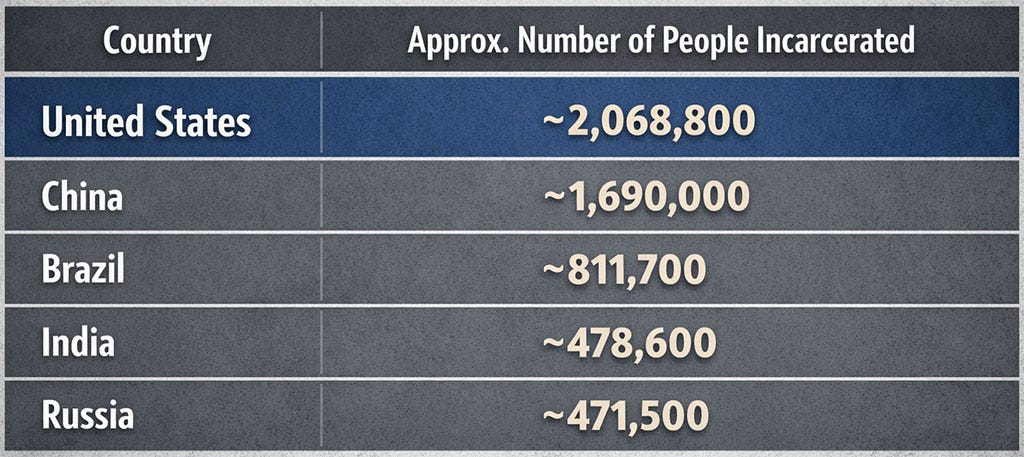
Today, the United States has the highest incarceration numbers in the history of humankind. It even leaves China in the dust — and China’s population dwarfs that of the U.S. Think about that for a second. A country with a fraction of the population locks up more of its own people.
Modern prisons aren’t plantations. But the thread linking racial control, prison labor, and political power didn’t snap in 1865. It was rewoven. And that thread runs straight from the end of the Civil War into the institutions still operating today.
Cultural Memory Was Never Fully Cleared
After World War II, Germany faced its Nazi past head-on: banning certain symbols, building memorials, and making sure history was taught in schools. After the Civil War, America took the softer path—choosing to let bygones be bygones instead of digging in for a real reckoning.
There was no national truth commission, no big push to dismantle Confederate memory until just recently—and even now, it’s still a fight. Reconciliation put white unity ahead of Black justice. So the wound closed up, but it never really healed.
Fast forward today, we don’t have cannons firing between states anymore, but the hostility is still there. Now it shows up in media bubbles, echo chambers, and talk that treats political opponents like existential threats instead of just people who disagree.
When people start tossing around words like “traitor,” “enemy,” or “take our country back,” it’s the same emotional energy as in the 1800s. When folks see each other as threats to survival instead of just rivals in government, that’s civil war thinking—just without the armies.
Federal Government Remains a Target
In 1861, secessionists called their fight a stand against federal tyranny. And not much has changed since then. You still hear people calling federal agencies illegitimate or corrupt whenever those agencies push policies that aren’t popular in their region. That old suspicion of central authority hasn’t gone anywhere.
Legally, the Civil War settled that states can’t just break away by force. But it never got rid of the resentment behind secession. You can still hear it in today’s complaints about federal overreach.
So, What’s Going on?
The Civil War ended on the battlefield in 1865—papers signed, armies sent home. But the moral debate over race, power, identity, and federal authority? That never really ended. One side surrendered in uniform, but not in spirit. Until America faces that unfinished argument honestly—not just with nostalgia—the fight will keep showing up in new ways and new spaces.
Look at the headlines, the maps, the slogans, the rallies—does this feel like a country that finished its war, or just one that switched up the battlefield?
This publication exists because readers like you choose to support it.
If you’re already a paid subscriber, thank you. If not, and you’re finding value here, I’d love for you to consider becoming one.
c
Very true! Back in 1952, at 12 years of age, in Northern Virginia, I and several of my cohorts had our little Confederacy. As the rest of the 7th grade class pledged allegiance to the flag, we pledged to the confederate flag that our school allowed to be hung. We truly believed the myths enabling our behavior. One day we got a new teacher who, after watching our little ritual, commanded: "you, you, you, and you, STAND UP!, GET THAT THING OFF THE WALL AND SALUTE THIS ONE!" We had no idea that he had spent WW2 as a POW in Germany. A few years later he taught American Government to us as HS Seniors. He certainly influenced my thinking for the better. DD
If you are not already familiar, you would probably enjoy the writing of Heather Fox Richardson. She often references how the failure to address the Civil War after it was over has resulted in many of the issues we see today.
https://heathercoxrichardson.substack.com/