


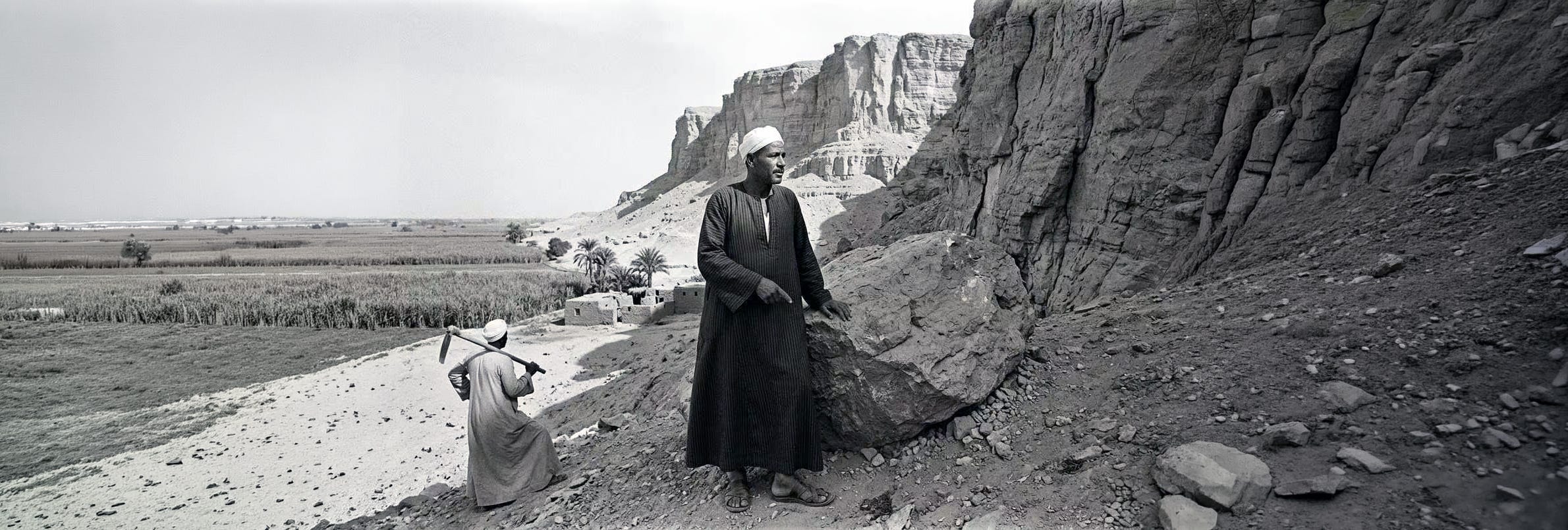
In December 1945, a farmer named Muhammad Ali al-Samman was digging for fertilizer near the cliffs of Jabal al-Tarif in Upper Egypt when his mattock struck a sealed clay jar. He hesitated over opening it, worried about what spirit might be sitting inside, then figured gold was the better bet and smashed it open.
What came out was thirteen leather-bound papyrus codices containing roughly fifty-two separate texts, nearly all of them unknown to any living scholar. His mother used some of the pages for kindling yes, we lost some of it to breakfast). The rest moved through the Egyptian antiquities black market for years, one codex getting smuggled out of the country and bought by the Jung Institute in Zurich, before the collection ended up at the Coptic Museum in Cairo.
By the time Elaine Pagels published The Gnostic Gospels in 1979, the story had hardened into something everybody thinks they know: here are the books the church tried to erase, the suppressed Christianity, the version with the divine feminine and the secret teachings and Mary Magdalene at the center. Dan Brown built a bestseller on that premise, and the History Channel has been recycling it ever since.
The suppression is documented, and the stories about the church burning these scriptures are literal, down to the emperors who signed the orders. Almost everything else in the popular version falls apart once you check the dates.
Provenance is half the story with a find like this, and the archaeology gets less attention than the theology. If that's your side of it, I'd recommend The Academic Archaeologist, who covers Ancient Near Eastern archaeology, especially Mesopotamian, and works from the excavation reports.
Nicaea Wasn’t a Vote on the Bible
Constantine convened the Council of Nicaea in 325, the bishops voted on which gospels to keep, the losers got thrown on a bonfire, and the New Testament as we have it came out of that room. At least, that’s the version most people carry around today.
In our universe, though, one of those things happened. The council fought about the relationship between the Father and the Son, produced a creed against Arius, and settled a scheduling dispute over Easter. The canon didn’t come up. We have the creed, we have canons on clerical discipline and readmitting lapsed Christians, and we have contemporary accounts. Nobody at Nicaea took a show of hands on Matthew, Mark, Luke, and John.
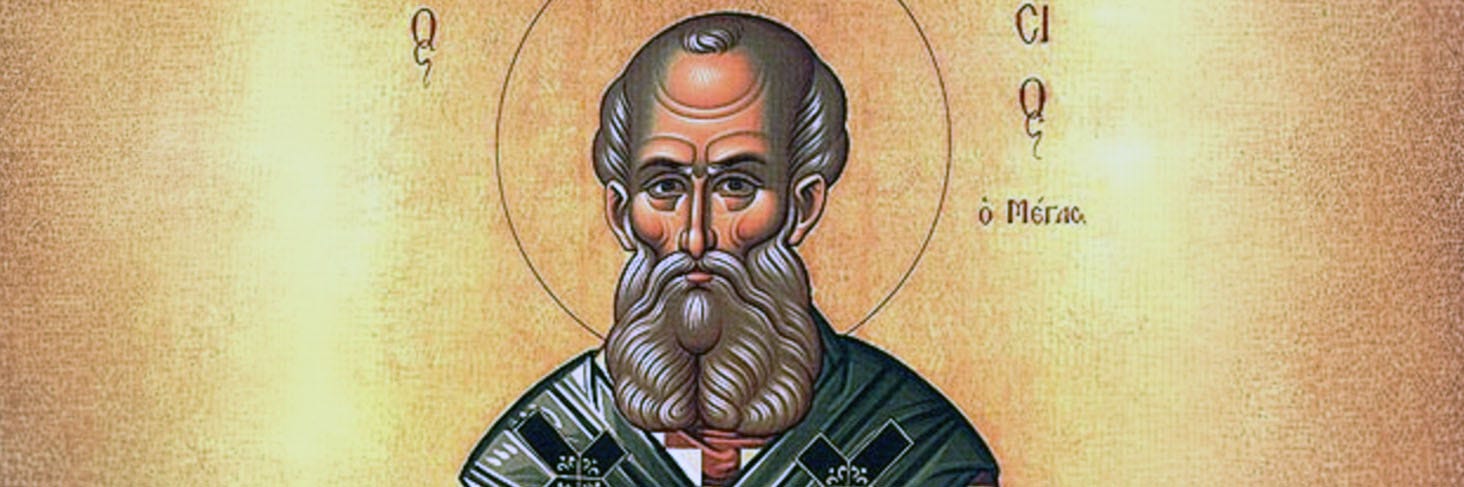
The four-gospel canon was already old news by then. Irenaeus of Lyon was defending it around 180, and his argument tells you how contested it still was: there are four gospels because there are four zones of the world and four principal winds, which is the reasoning of a man asserting a conclusion he can’t otherwise justify. The first surviving list matching the twenty-seven books of our New Testament exactly comes from Athanasius of Alexandria, in his Festal Letter of 367, more than four decades after Nicaea and roughly three centuries after the crucifixion.
That letter matters for the jar in the cliff. Athanasius told Egyptian Christians which books were legitimate and instructed them to purge the rest. The Nag Hammadi codices were bound in the mid-fourth century (the scrap paper used to stiffen the covers includes dated receipts from the 340s), the Pachomian monastery complex sat a few miles away, and somebody buried the whole library shortly after. A monk clearing out the library ahead of an enforcement order is a hypothesis rather than a proven fact, and it fits the evidence better than anything else on offer.
The God Who Didn’t Know There Was Anything Above Him
The Secret Book of John has a creation story that reads like a hostile takeover of Genesis. The true God is unknowable and remote. A lesser being called Yaldabaoth, produced by an error in the divine order, makes the material world and then announces that he’s the only god there is, which the text presents as the boast of an idiot who has never looked up. That “I am God and there is no other” line is lifted straight out of Isaiah. The point being made is that the God of the Hebrew Bible is the villain, and the serpent in Eden was doing humanity a favor.
The rest of the library ranges wider than that. The Gospel of Truth, probably from the circle of Valentinus, is closer to a meditation on ignorance and the joy of being found. The Gospel of Philip calls Mary Magdalene the companion of Jesus and says he loved her more than the other disciples, in a manuscript with holes in exactly the places people most want to read. The Gospel of Mary, which came from a separate manuscript bought in Cairo in 1896 rather than from Nag Hammadi, has Peter refusing to believe a woman received revelation and Levi telling him to sit down. The Gospel of Judas surfaced later still, in a codex that spent years decaying in a safe deposit box before its 2006 publication, and the initial reading of Judas as the hero who alone understood Jesus got picked apart by April DeConick, who read the same Coptic and concluded Judas is a demon handing his teacher over to the wrong powers.
What holds most of this together is a conviction that salvation comes through knowledge rather than through a death and a resurrection, that the material world is a mistake, and that a divine spark is stuck inside you waiting to hear its own name.
Irenaeus Wrote the Losers Out of the Record
Until 1945, nearly everything anyone knew about these Christians came from the people who wanted them gone. Irenaeus wrote five books against them. Tertullian, Hippolytus, and later Epiphanius kept the genre going, and Epiphanius in particular collected heresies the way other people collect stamps. They quote their opponents selectively, paraphrase uncharitably, and describe rituals that sound invented for shock value.
Then the state joined in. Constantine ordered the books of Arius burned and made possession a capital offense. Theodosius I and his successors turned anti-heresy legislation into a standing program, and the Theodosian Code preserves law after law on confiscating property, banning assemblies, and destroying texts. Christianity spent the fourth century acquiring the machinery of an official religion and used it immediately.
So the losing texts survived by accident, in translation, in the ground, in Coptic versions of Greek originals nobody kept.
If even a small fraction of regular readers chose to become paid subscribers, I could spend less time managing the publication and more time in the archives doing the rigorous research this work demands.
Why Nag Hammadi Doesn’t Get You Closer to the Historical Jesus
The canonical gospels were written roughly forty to sixty-five years after the crucifixion by authors who never met the man and whose names were attached to the texts generations later. That’s bad. The Nag Hammadi material is worse. Most of it dates to the second and third centuries, and it shows it, arguing about problems that only existed once Christians had spent a hundred years developing theology. The Secret Book of John is doing Platonism with Jewish scripture as raw material. The Gospel of Truth assumes a Christian audience already fluent in a system of thought.
The Gospel of Thomas is the one serious exception, a collection of 114 sayings with no crucifixion, no resurrection, and no narrative at all, and there’s a live scholarly argument about whether some of its core goes back as early as the canonical material or whether the whole thing is a second-century compilation. Bart Ehrman lands on the later side, Stephen Patterson and others push earlier. Even the optimistic reading gives you sayings rather than events.
Anyone selling these texts as the suppressed true biography is, intentionally or unintentionally, running the same play as the apologists, just from the other direction.
The Valentinians Were Sitting in the Pews
The texts filed under “Gnosticism” contradict each other. The Secret Book of John gives you a creator produced by a mistake, hostile and ignorant, with an entire mythology of aeons behind him and a baptismal rite to go with it. The Gospel of Thomas has no villain creator, no aeons, no cosmic accident, just sayings about a kingdom already spread out over the earth that people fail to see. The Valentinians landed somewhere else again, with a creator who was ignorant rather than malicious, and they held that position while sitting in ordinary congregations taking communion next to everyone else. Tertullian says Valentinus was once in the running to be bishop of Rome.
Irenaeus opens his attack by complaining that these people use the same words as everybody else and mean something different underneath, which is the complaint of a man who can’t pick his opponents out of his own congregation. They shared buildings, clergy, and scripture with the bishops writing against them, and the line between the two groups had to be invented before it could be enforced.
What the Fourth Century Was For
Athanasius sent his letter in 367, and somebody near Nag Hammadi put a library in the ground. A Christian in 150 could hold a view that raised no eyebrows in Alexandria and got you thrown out in Lyon. We know who won that argument, roughly when, and what they did to the other side’s books, and none of it tells you which side had the better claim on the man they were both writing about.
Sources and Further Reading
Bart D. Ehrman, Lost Christianities: The Battles for Scripture and the Faiths We Never Knew (Oxford, 2003)
Bart D. Ehrman, Lost Scriptures: Books That Did Not Make It into the New Testament (Oxford, 2003)
Elaine Pagels, The Gnostic Gospels (Random House, 1979)
Karen L. King, What Is Gnosticism? (Harvard, 2003)
Michael Allen Williams, Rethinking “Gnosticism”: An Argument for Dismantling a Dubious Category (Princeton, 1996)
David Brakke, The Gnostics: Myth, Ritual, and Diversity in Early Christianity (Harvard, 2010)
Marvin Meyer, ed., The Nag Hammadi Scriptures: The International Edition (HarperOne, 2007)
April D. DeConick, The Thirteenth Apostle: What the Gospel of Judas Really Says (Continuum, 2007)
Walter Bauer, Orthodoxy and Heresy in Earliest Christianity (English translation, Fortress, 1971)
Bruce M. Metzger, The Canon of the New Testament: Its Origin, Development, and Significance (Oxford, 1987)
If orthodoxy was merely the theology of the imperial winners, why did ancient Christian traditions outside the Latin West including Ethiopia, preserve broader canons while still rejecting the Gnostic reversal of the Creator, creation, incarnation, and resurrection?
Interesting. I remember the Elaine Pagels book, and when I read it, it made sense to me. That there was more to it -- more "gospels," more to Gnosticism -- makes sense too. We know what we know until we know more.
As for the religious import, to me as a Greek Orthodox it matters not at all. We get baptized, married, and buried without the necessity of anyone's saying anything except for what's in the liturgy. We don't even get to say "I do."
As a rule, we don't ponder especially hard about God or Jesus. Even my grandmother, the most religious of all of us, did the sign of the cross every time she donned her black bathing costume for a dip in her middle daughter's saltwater swimming pool in Connecticut, in her later years went to church when someone took her, and was content with her family and her cooking. Good enough.