


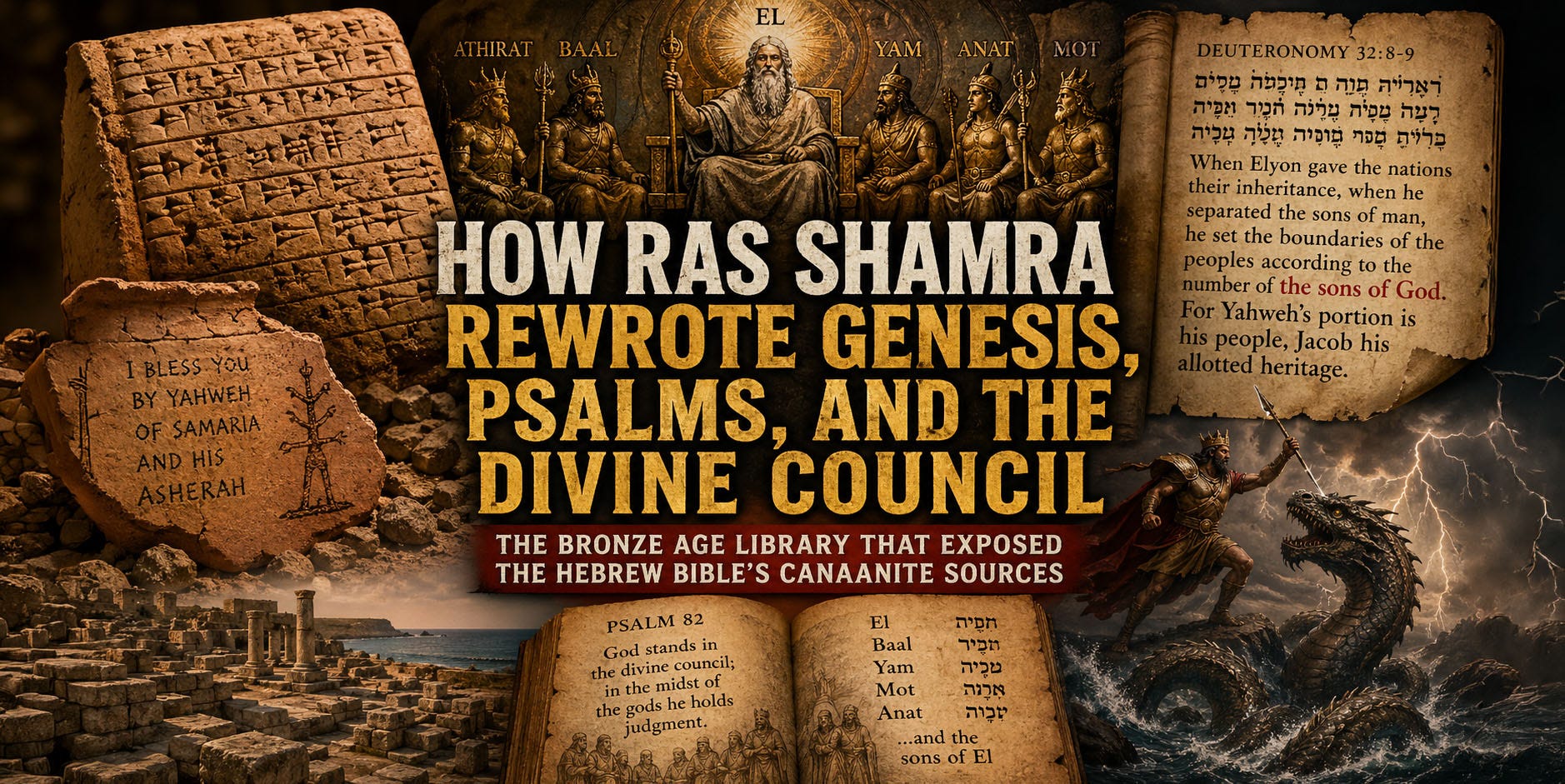
In the spring of 1928, a Syrian farmer was plowing his field on the Mediterranean coast when his blade snagged on a slab of stone. Unbeknownst to him, he’d hit the roof of a vaulted Bronze Age tomb. It took a year for the French archaeologist Claude Schaeffer to arrive, open the tomb, and realize that beneath the orange groves and wheat stalks lay an entire forgotten city, a major Late Bronze Age trade center, destroyed around 1185 BCE during the Bronze Age Collapse.
The city’s name was Ugarit. Its royal palace had a library with thousands of clay tablets. And those tablets, once they were finally deciphered, would do more damage to the doctrine of biblical uniqueness than any single archaeological discovery before or since.